You might think substrates only purpose it to make your aquarium look good.
After all, it’s available in so many different textures and colors that you can give your aquarium any look you want.
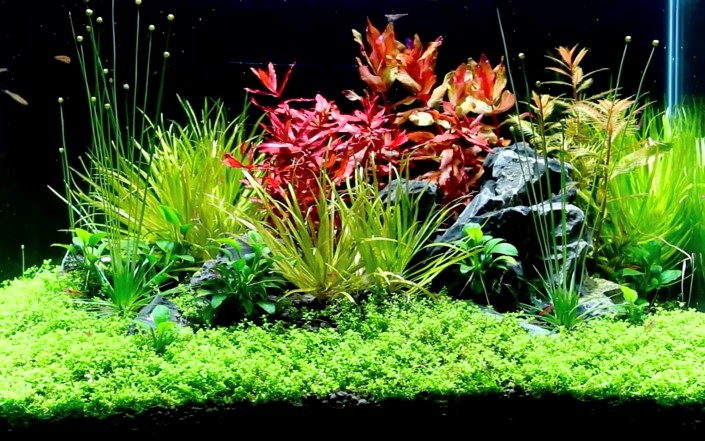
The truth is that substrate plays a really important role in the health of an aquarium.
In fact, it’s one of the most important parts of a fish tank.
That’s why using the best planted tank substrate is key to having beautiful, thriving plants and fish.
Table of Contents
Benefits of Substrate in Aquarium
There are a few benefits to having substrate in an aquarium but the biggest one is that is acts as a home for beneficial bacteria. Because there is so much surface area in substrate, it provides lots of little nooks and crannies for bacteria to live.
Beneficial bacteria are necessary to break down waste in the tank. Here’s how it works.
As waste begins to break down, good bacteria converts it to ammonia. Ammonia is very toxic to both plants and fish so another bacteria converts it into nitrite. Nitrite is also toxic but not nearly as much as ammonia. Yet another bacteria then convert nitrite to nitrate. Nitrate is only toxic at extremely high levels.
There is no bacteria that can eliminate nitrate from a freshwater tank. The only bacteria that can do that is anaerobic, which means it lives in an environment without oxygen. This is precisely why regular water changes are so important.
When it comes to planted tanks, another huge benefit is that substrate gives the plants a place to root and adds stability. Some substrates even contain natural minerals and nutrients that help plants grow strong and healthy.
Best Substrate for Planted Tanks
Now that you know how beneficial substrate is you can see how important it is to be sure you choose the right one. Let’s take a look at some of the most effective and beneficial options available for a planted tank.
| Pictures | Substrates | For Aquariums | Links |
|---|---|---|---|
 | Carib Sea Eco Complete Planted Black Aquarium Substrate | Freshwater Planted Aquariums | |
| Fluval Plant and Shrimp Stratum | Freshwater Planted Aquariums | ||
| Flourite Black | Any Planted Aquariums | ||
| ADA Aqua Soil Amazonia Normal Type | Any Planted Aquariums | ||
 | Mr. Aqua N-MAR-066 Fine Pet Habitat Water Plant Soil | Planted Aquariums | |
| Activ-Flora Floracor for Aquarium | Planted Aquariums | ||
 | UP AQUA Sand for Aquatic Plants | Planted Aquariums |
Best Planted Tank Substrate Reviews
1. Carib Sea Eco Complete Planted Black Aquarium Substrate

The best thing about this substrate from Carib Sea is that it comes ready to use. It’s made of volcanic soil that’s loaded with iron, calcium, sulfur, and over 25 other minerals and nutrients that plants need to thrive.
This substrate is bimodal, which means that there are both small and larger granules. The idea is itself sorts with smaller pieces working their way to the bottom of the tank while the large pieces stay on the top.
Why is this important?
As the smaller pieces sift to the bottom, they leave gaps in the larger top layer. These spaces help plant roots with oxygen uptake and provide a place for good bacteria to grow.
Not only does Eco Complete provide the perfect home for beneficial bacteria, it actually comes with some colonies already established. This means you can cycle aquariums faster and you won’t have to wait as long to put a new fish into the aquarium.
2. Fluval Plant and Shrimp Stratum
Something that makes this substrate from Fluval such a great choice is that it’s ideal for stimulating freshwater plant growth.
The size and shape are ideal for plant roots to penetrate plus it’s made from volcanic soil and has a lot of key nutrients plants need.
The black granules of this substrate are really lightweight. They won’t compact or break and are exceptionally porous. As you might have guessed, this makes it an ideal home for beneficial bacteria.
This substrate supports a naturally acidic pH in the water which most plants and fish love. It’s also a great substrate for a tank with shrimp, especially for breeding.
There are enough nooks and crannies for babies to hide from predators so that they can escape being eaten until they grow.
3. Flourite Black
Up next is Flourite Black, a natural substrate made from clay gravel. While it can be mixed with other substrates, it works best when used on its own.
This is an extremely porous substrate that is not coated or treated and won’t change the pH of the water.
One really awesome thing about this substrate is it was designed to last the lifetime of the aquarium.
What does that mean? It will never need replacing.
While this substrate is safe for fish, it’s really made for a planted tank. It provides a secure base for growing an extensive, strong root system. It’s a great balance. Not so dense that it will inhibit growth but not so loose that it isn’t stable.
As we mentioned, this substrate is really porous which makes it easy for water, minerals, and other nutrients to get to the roots for absorption. Plus, the porosity is an important factor in supporting beneficial bacterial colonies.
4. ADA Aqua Soil Amazonia Normal Type
This Amazonia substrate is a newer product that’s proving it has what it takes. It’s made from rare plant-based soil from Japan and is mostly composed of decomposed leaf mulch. This is a natural substrate that loaded with organic nutrients and minerals to help plants grow.
Another way this substrate benefits the aquarium is by lowering the pH to a level that’s really friendly to most plants. It softens the water, too, to make the aquarium environment more hospitable.
These granules are irregularly shaped and are not uniform in size. When they settle in the bottom of the tank, smaller pieces will sift down to the bottom creating a network of small holes and passages.
This makes an ideal environment for root growth and support. It’s also perfect for keeping water and oxygen moving through, delivering everything the plants need right to the roof. And, of course, it’s the perfect place for beneficial bacteria to flourish.
5. Mr. Aqua N-MAR-066 Fine Pet Habitat Water Plant Soil

This substrate from Mr. Aqua is a carefully blended mix of organic and inert ingredients that provides plants the essential nutrients they need for growth. Not to mention, it also promotes root development.
The pellets vary slightly in size for a more natural look. This also creates areas where the roots can easily push through while still providing enough stability so the plants grow strong and healthy.
That’s not all, this size, shape, and composition of this substrate are ideal for beneficial bacteria. And, because it lasts for up to 18 months, you won’t have to worry about disturbing established colonies with frequent substrate changes.
This substrate also softens the water and acts as a buffering agent to keep the pH at an optimal 6.6 to 6.8 and can buy you longer times between water changes, too.
6. Activ-Flora Floracor for Aquarium
Activ-Flora is a 100% natural substrate that doesn’t contain any dyes or additives. It won’t alter the pH plus it’s rich in iron so there’s no need to add any laterite.
This substrate is extremely microporous which means there are a lot of places for beneficial bacteria to grow. That’s not all, it actually has colonies of living bacteria in it which makes it really quick and easy to begin cycling your tank.
The grains are naturally shaped to promote maximum diffusion to deliver the right amount of essential nutrients to plant roots. Plus, it naturally contains phosphorus, calcium, potassium, zinc, aluminum, and copper, just to name a few. These elements give it its natural deep rust red color.
The extremely porous nature of this substrate also makes it great for supporting a healthy, supportive root system that slowly absorb the natural micronutrients contained in Activ-Flora.
Because of the slow release and absorption by the roots, this substrate is self-sustaining, meaning you don’t have to replace it very frequently if at all.
7. UP Aqua Sand for Aquatic Plants

Last but not least is this sand substrate from UP AQUA. One key to its effectiveness is that the grains are different sizes, ranging from about 2 to 3mm. It’s not at all dusty or even sandy as the name implies.
When the grains settle, they leave a lot of small air pockets which are great for plant growth. The pockets along with the rough texture of the grains also provide a perfect place for beneficial bacteria to grow.
This substrate is loaded with minerals and nutrients plants need to grow. Plus, its pH is 6.5 to 7 so it won’t throw the pH of your tank out of balance.
The granules are lightweight so it’s easier for plants to root but still provides enough support for plants to grow to their full potential.
Another great thing about this product is it doesn’t cloud the water when you first put it in the tank. That’s not all, it also doesn’t leach any ammonia and lasts a really long time without breaking down.
What is the Best Substrate for a Planted Tank?
Our pick for best substrate for planted tanks is Carib Sea’s Eco Complete Planted Black Aquarium Substrate. It comes ready to use which means not rinsing is required.
One of the best things about it is that it comes with beneficial bacterial colonies already growing. This makes the initial cycling of the tank much faster since these important colonies have already started growing.
The bimodal granules create a substrate with a lot of air holes and nooks and crannies that provide a nice home for good bacteria while also helping plants root. It’s easy for them to push through and also makes a solid foundation.
This substrate is also loaded with the minerals that plants need to thrive and delivers them right to the root. Overall, this is a great choice for planted tanks, with or without fish.
How Much Substrate for Planted Tank?
At a minimum, you should use at least 1 inch of substrate for a planted tank. A rule of thumb to estimate how much substrate you will need for an inch is to use one pound of substrate for each gallon. So, for a 5-gallon tank, use 5 pounds of the substrate.
That said, as long as it’s more than an inch, you can make your substrate as deep as you want. There isn’t a maximum amount and, honestly, giving your plants more than an inch will give them a better opportunity to build a secure root system.
There are 2 exceptions to this. First, make sure it’s a substrate that won’t alter the pH of the water. If you use a lot of a substrate that’s known to alter pH, it can very quickly throw off your entire tank.
Second, if you have fish or other animals in your tank, make sure they have enough water to move around in. In this case, it’s best to stick to about 1 to 4 inches.
How to Set Up Substrate for Planted Aquarium?
Some substrates can cloud the water during initial setup, especially if not done correctly. To avoid this, follow these steps.
First, rinse the substrate. Use a large bucket, fill it with water, agitate the substrate, and repeat until the water runs clear. There are some exceptions to this, though.
Some substrates, including a few on our list, claim that you don’t need to pre-rinse. This is especially true if you have a substrate that comes with bacterial colonies already growing. Continued rinsing and agitation will destroy any establish bacteria.
If you want to give these substrates a rinse before, put them in a large bucket and cover with water, but do not agitate the substrate. A quick rinse with water won’t do too much damage but if you start vigorously shaking the substrate, the bacteria likely won’t survive.
Next, place the substrate in the bottom of an empty tank. Remember, use 1 inch at a minimum. Though you can put in as much as you want, 3 to 4 inches is ideal.
Add water slowly to avoid stirring up any leftover sediment or dust. Another thing you can do to avoid causing too much splashing is to place an aquarium safe plate on top of the substrate then pour the water onto the plate.
What does this do?
Since the mainstream of water coming into the tank hits the plate and not the substrate, nothing gets disturbed. The plate disperses the water more gently into the tank and doesn’t splash at all.
Stop adding water once it reaches about 6 inches deep. The next step is to add any other landscaping like rocks, logs, or ceramic decorations. You want to put these in before the plants because they’re easier to work around.
To add plants, first, remove any fibers that are attached to the root from packaging. Dig a hole in the substrate that’s large enough to accommodate the roots of the plant. Don’t go all the way through, though, you want to leave a layer between the roots and the bottom of the tank.
Once the roots are buried, add more substrate over them. This provides stability to the stems and helps hold the roots in place before they really start to spread out enough to properly support themselves.
You don’t have to wait for the aquarium to cycle before adding plants as you do for fish or other animals. In fact, the plants actually help everything adjust to the proper levels more quickly. Just make sure you remove any dead leaves and you’re good to go.
If you’re planning to add fish to your tank, you do have to wait for the tank to cycle properly. This can actually take a few weeks. Check the water with a test kit and don’t add any fish until the ammonia level is zero.
Conclusion
If you’re looking for the best substrate for a planted tank, there are a few things to consider. It has to be light enough and create enough air pockets so that the roots of your growing plants can easily move through it.
It also has to be supportive enough for the plants to grow to their full potential without coming loose or floating to the surface.
Another big benefit is if the substrate contains the minerals that the plants need for proper growth. If it does, you shouldn’t have to add anything else to the tank as it should be self-sustaining.
The more surface area, the better as this allows for adequate growth of beneficial bacteria. This is particularly important if you’re planning on adding fish or other living things to your tank.
Our pick for best planted tank substrate is Carib Sea’s Eco Complete Planted Black Aquarium Substrate. It’s easy to set up, provides a great base for good bacteria and strong root systems, and has the minerals your planted tank needs to thrive.
Lester says
Is the Carib Sea Eco good for shrimp colony?